
Noise Assessments for Planning
Local Authorities often require a noise impact assessment to make sure a development won’t harm existing or future residents. Assessments cover noise from new fixed plant (such as condensers, fans and generators) and from indoor and outdoor activities (such as industrial operations, sport, leisure and traffic). They show the council that your proposal meets its requirements and can be granted planning permission.
In most cases, plant and commercial noise is assessed using BS 4142:2014+A1:2019.
Contact us now for a no-obligation discussion of your requirements and a free quotation.
Without a robust noise assessment, applications can be delayed by requests for further information, refused, or approved with restrictive conditions that are difficult to meet. A well-prepared assessment gives the council confidence early and helps keep your project on programme.
When is a noise impact assessment needed?
We regularly prepare noise impact assessments for:
- New mechanical plant, such as air conditioning, chillers, extract fans and generators
- Restaurants, bars, pubs and takeaways, including kitchen extract and amplified music
- Gyms, leisure centres, sports pitches and multi-use games areas
- Industrial and warehouse units, distribution centres and service yards
- Supermarkets and retail stores, including deliveries and car parks
- Petrol filling stations, car washes and EV charging hubs
- Extended opening hours or changes of use for existing premises
- New homes close to roads, railways or commercial and industrial uses
- Discharging noise conditions on an existing planning permission
Contact us now for a no-obligation discussion of your requirements and a free quotation.
Our approach
- Agree the method. We discuss your proposals, identify the noise sources and nearby receptors, and agree the assessment method and noise criteria with the Local Authority.
- Survey. We install monitoring equipment on site to measure existing background and ambient sound levels over a representative period, taking account of weather conditions so that the data is valid.
- Assess. We analyse the survey data alongside source data for the proposed installation or activity, and assess predicted noise levels against the agreed criteria.
- Mitigate. If noise levels are too high, we advise on practical measures to achieve compliance.
- Report. Our findings are summarised in a technical report suitable for submission to the Local Authority, to support a planning application or discharge planning conditions.
For larger schemes, we can prepare noise chapters for Environmental Statements and advise on the masterplanning of a development.

Two sides of the same question
A noise impact assessment usually looks at one of two things, and sometimes both:
- Noise from your development. Will new plant, activities or traffic disturb people already living or working nearby?
- Noise affecting your development. Will future occupants of new homes, schools or offices be exposed to unacceptable noise from roads, railways, aircraft or neighbouring businesses?
For new residential schemes, we assess internal and external noise levels against BS 8233:2014 and ProPG: Planning & Noise, and design glazing, ventilation and layouts that give residents comfortable conditions without overcomplicating the build.
Standards and guidance we work to
Depending on the project, our assessments draw on:
- The National Planning Policy Framework, the Noise Policy Statement for England and the Planning Practice Guidance on noise
- BS 4142:2014+A1:2019 for industrial and commercial sound
- BS 8233:2014 and ProPG: Planning & Noise for new residential development
- World Health Organization guidance on community noise
- Calculation of Road Traffic Noise (CRTN) and Calculation of Railway Noise (CRN)
- IEMA Guidelines for Environmental Noise Impact Assessment
- Local Authority noise policies and Supplementary Planning Documents
Practical mitigation
Where noise levels are too high, we look for the simplest, most cost-effective solution first. Depending on the site, this might include:
- Selecting quieter plant or using low-noise and night-time modes
- Relocating plant or activities away from sensitive neighbours
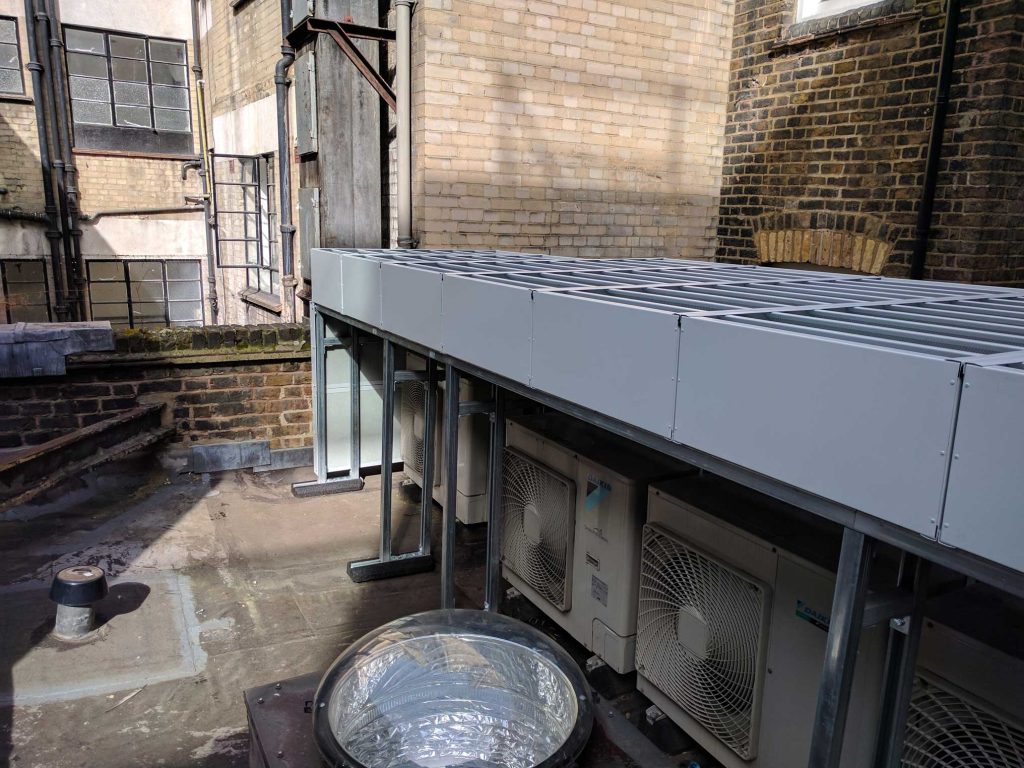
- Acoustic enclosures, attenuators, louvres and barriers
- Building layout, orientation and screening
- Upgraded glazing and acoustic ventilation for new homes
- Management measures, such as restricted delivery or operating hours
Frequently asked questions
Do I need a noise impact assessment? If your council has asked for one, or your proposal involves new plant, extended hours or new homes in a noisy area, it is likely. Send us the details and we’ll tell you what is needed.
Should I get advice before choosing equipment? Yes. Involving us before plant is selected or ordered is usually the cheapest way to avoid problems later.
Will you deal with the council? Yes. We can agree the assessment method with Environmental Health in advance and respond to any questions after submission.
Why choose Venta Acoustics?
- In-depth knowledge of the standards and guidance Local Authorities rely on
- Experience across residential, commercial, retail and industrial projects
- Quick response times and clear, planning-ready reports
- Pragmatic mitigation advice that keeps your scheme viable
Get in touch with your site address and proposals, and we’ll explain what’s needed, how long it will take and what it will cost.